AMD stories
Buyers can now reserve MSI's first RTX Spark laptop, a 2-in-1 aimed at local AI work, with Australian pre-order extras worth AUD $179.
The deal will deepen SAP's AI tools for hiring and reskilling as employers face faster shifts in jobs, skills and workforce planning.
Businesses handling sensitive AI data can now run Kubernetes workloads inside trusted execution environments with added attestation and key controls.
Meta is boosting the computing base for its frontier models with AMD hardware, while AMD will invest USD $1 billion in the equity offering.
Developers will get a single route for PyTorch CPU tuning across both chip rivals, reducing fragmentation as AI workloads move onto x86 systems.
The move could let data centre builders use common blueprints for high-power AI systems, easing deployment of racks up to 250kW.
Enterprises building robots are being pushed to judge systems by timing, safety and reliability rather than peak compute alone.
European startups and larger firms will gain more AI computing capacity as Scaleway expands its first supercomputer beyond France with AMD chips in Sweden.
Businesses can now keep sensitive agentic AI tasks on-device, as AMD's new Ryzen AI Max 400 systems offer more memory and local compute.
Owners of older Radeon cards will soon gain access to AMD's latest upscaling tech, with support also coming to several Ryzen AI chips and Xbox consoles.
The private cloud refresh gave Australian business customers faster SQL reporting and more headroom for AI workloads without disrupting service.
The blueprint could give hyperscalers and enterprises a cheaper way to run agentic AI, with flexible CPU and GPU racks and open software.
Enterprises facing tougher AI security and operational demands can now choose four new systems built for inference, analytics and simulation.
The update aims to cut manual verification work for teams building software-defined products, with new testing and inspection tools added.
By automating debugging, design and deployment tasks, Ross could cut development time for teams working across AMD's increasingly complex embedded stack.
As AI workloads shift from training to inference, firms risk stranded kit unless they build systems that can adapt over five to seven years.
The update lets businesses run sensitive AI workloads inside verified trusted execution environments on Kubernetes without exposing data or models to operators.
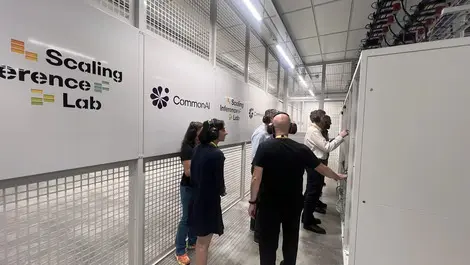
Backed by ARIA, the Harlow campus will host five AI clusters to give UK startups a neutral testbed for rack-scale systems by early 2027.
The update gives enterprise IT teams earlier warning of GPU and cooling faults that could throttle AI workloads or trigger outages.
The new range aims to help enterprises run AI inference and analytics on standard servers while adding stronger security and easier management.