

Ablano tests boron nitride coating on rocket flight
Mon, 24th Aug 2026
Ablano has completed a low-orbit flight test of its boron nitride nanomaterial, in what it described as the first mission of its kind for the material.
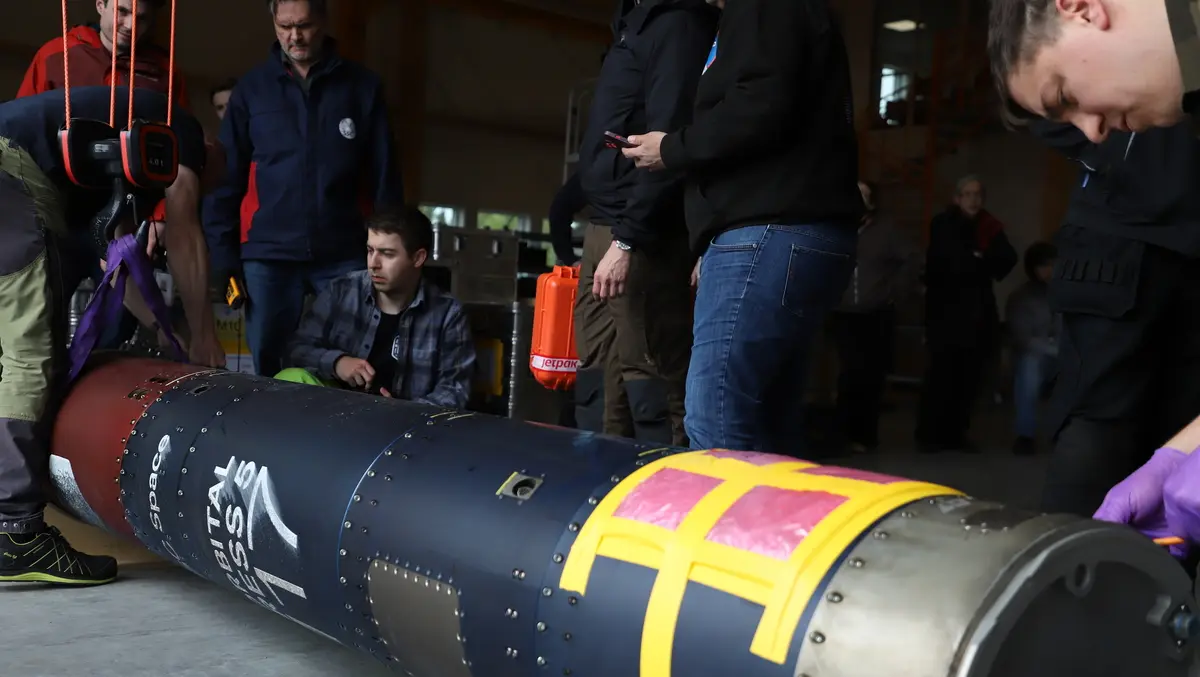
The Perth-based advanced materials company tested the coating on four panels mounted to the exterior fuselage of a rocket during a flight that reached 270km before the vehicle was recovered near Kiruna in northern Sweden.
Each panel carried a different concentration of the proprietary material, known as boron nitride nano onions, to assess its performance during launch and re-entry. The rocket remained above the Kármán line for about six and a half minutes.
The recovered panels are now being analysed at the University of Western Australia to establish a real-world baseline for the material's performance. The work forms part of Ablano's effort to move the product towards commercial use in launch vehicles and spacecraft components.
The company is targeting a longstanding problem in the launch market: corrosion and wear limit how often rocket parts can be flown before they need replacing, adding to mission costs as launch providers try to improve reuse rates.
Ablano said the boron nitride material is designed to reduce corrosion, lower friction and extend the working life of coated parts. It added that the material is up to 70 per cent lighter than the one it replaces, which could make it relevant for applications where weight remains a critical constraint.
The test comes as launch companies push to reduce the cost of access to space. Ablano pointed to a broader industry effort by SpaceX and other launch operators, including Australia's Gilmour Space, to cut launch costs beyond USD $100 per kilogram.
That commercial pressure has increased interest in materials that can help launch systems survive repeated flights. If components last longer between replacement cycles, operators can spread maintenance and manufacturing costs over more missions.
Michael Rimbas, Executive Director, Ablano, said the test was driven by that commercial logic.
"The entire global space sector is focused on reusability. The longer a component lasts, the cheaper every launch becomes, and this is the economic opportunity that our nanotechnology feeds into. While we've already conducted extensive lab testing, there is no substitute for real-world launch research, so this is an important step towards commercialising the technology," said Michael Rimbas, Executive Director, Ablano.
Supply chain role
The launch also highlights a wider debate about where Australia can position itself in the space sector. While the country has sought to build its launch credentials, companies and policymakers have argued that more durable value may lie in the supply chain, including specialised manufacturing and materials.
Ablano's work sits within that part of the market. The company said boron nitride nanomaterials could be used not only in coatings and lubricants for launch systems, but also in radiation shielding for longer-range missions because of their neutron absorption properties.
That gives the material a possible role beyond rockets, although the current test focused on survivability during launch and descent. The panel analysis will help determine how the coating behaves under actual flight conditions rather than in controlled laboratory settings.
Several Australian companies contributed to the mission. ResearchSat, a South Australia-based payload and flight-hardware developer, co-developed the experiment, while Queensland-based Implement Space arranged access to the mission.
The collaboration was first assembled with support from the South Australian government. The involvement of companies from Western Australia, South Australia and Queensland points to a cross-state effort in a niche area of space manufacturing.
Rimbas said such work could give Australia a more defined role in the economics of future space missions.
"Australia already offers favourable orbital access but we have the scientific and manufacturing capabilities to be more than a launch pad for other countries - we can lead a part of the supply chain that is critical to the future low cost space economy. By proving that this material can survive the real conditions of launch and descent, we're building an exciting sovereign capability for Australia," said Rimbas.
Ablano's broader portfolio includes boron nitride nanostructures and graphene-based materials for use across space, defence and manufacturing. In this case, data from the recovered rocket panels will provide the clearest indication yet of whether its material can move from research into routine use on reusable flight hardware.